

If you’ve spent any time scrolling through travel content about southern Italy, you’ve probably seen the same handful of Apulian destinations come up over and over again – Alberobello, Ostuni, Lecce.
Don’t get me wrong, they’re stunning.
But if wine is the reason you’re boarding that plane, there are three cities that deserve a permanent spot on your radar that don’t always get the headline treatment they deserve. I’ve had the privilege of traveling through Puglia with a camera and a very willing wine glass, and these are the three cities (and the wines) that have stayed with me – not just for what was in the bottle, but for the whole sensory experience of being there.
1) Locorotondo: The Wine City
There’s a reason Locorotondo is nicknamed “The Wine City.” Sitting high on a hilltop in the Valle d’Itria, it’s famous for its perfect circular layout – a maze of winding cobblestone streets, flower-filled balconies, and sweeping views over vineyards and olive groves. It’s the kind of place that makes you slow down whether you planned to or not.
The typical wine here is the Bianco Locorotondo DOC – a crisp, dry white traditionally made from a blend of Verdeca and Bianco d’Alessano, often with Minutolo in the mix. It’s light, aromatic, and pairs beautifully with just about everything on a Apulian table. With its straw-yellow color and delicate fruit notes, it’s an easy-drinking, natural companion to the local cuisine.
For tastings, Pavì Wine Restaurant is a solid choice for trying regional wines alongside food, with a lovely terrace overlooking the Valle d’Itria, and La Bottega de I Pastini is a relaxed spot focused on local producers. If you want a proper cellar-door experience, I Pastini and Cantina Cardone are both a short drive from town and well worth the detour. HOWEVER, one of my favorite hidden gem spots is still U Curdunn. You get a little bit of show cooking, great wine and typical plates that’ll leave you dreaming about them for months on end.
My honest take: Locorotondo is one of the most photogenic towns I’ve ever pointed a camera at. Come at golden hour, order a glass of wine, and just stand at the edge of the old town looking out over the valley. You’ll understand immediately why this place has held onto its identity so fiercely.
2) Minervino Murge: The Gateway to Nero di Troia Country
Minervino Murge doesn’t get nearly enough attention, and I think that’s partly because it sits in the northern part of Puglia where most wine tourists don’t venture as far. That’s their loss.
This is the heart of the Castel del Monte wine zone; a rugged area that is the birthplace of Nero di Troia, a grape known for its structure and elegance, with vineyards lying in the shadow of Castel del Monte, a UNESCO World Heritage site. The castle itself is worth a visit on its own terms – a mysterious octagonal fortress built in the 13th century by Emperor Frederick II that has puzzled historians for centuries – but pair that with the local wine scene and you have a full, deeply satisfying day.
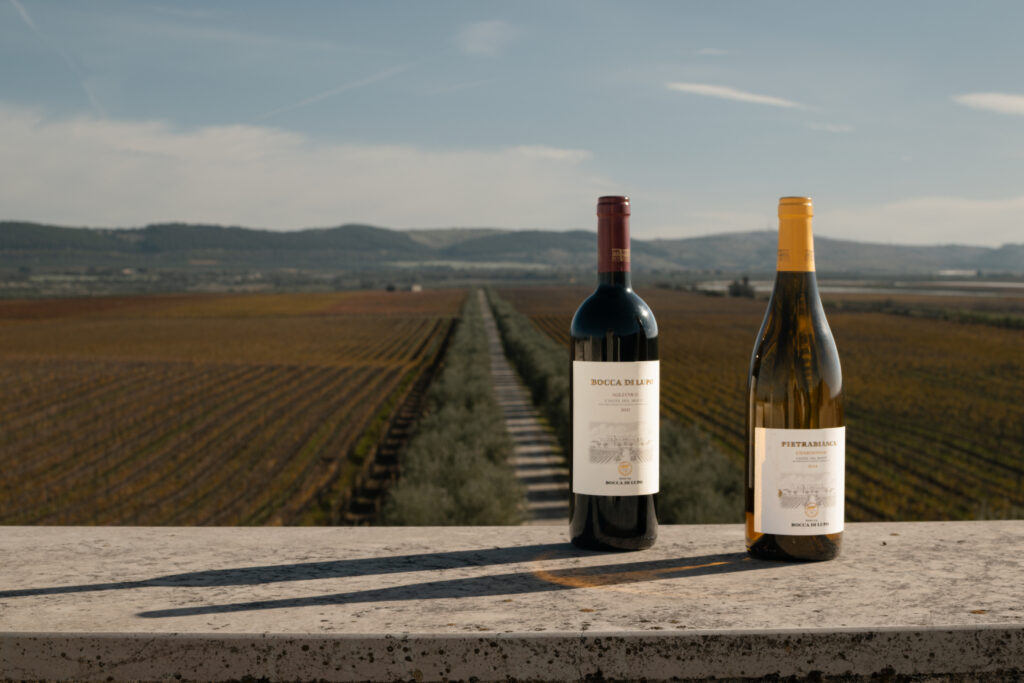
The Castel del Monte Nero di Troia Riserva DOCG takes its name from this famous castle, and the production zone sits partially within the Parco Naturale dell’Alta Murgia. Nero di Troia is a late-ripening grape that isn’t easy to grow – it’s very demanding in climatic terms, which is why its cultivation has historically always been limited to a fairly narrow area. That scarcity makes finding a great bottle here feel like a discovery. If you’re looking for specific wineries to visit, Tenuta Bocca di Lupo and Cantine Rivera are always on the top of my list for suggestions.
Torrevento in nearby Corato is located in a restored monastery and is famous for its bold reds – one of those winery visits that’s as much about the setting as the wine in the glass. The whole area has an untamed, cinematic quality to it that I find endlessly compelling as a photographer.
If you like your wine with a side of history and a landscape that feels nothing like a postcard, Minervino Murge is your place.
Manduria: The Home of Primitivo
If Locorotondo is delicate and architectural, and Minervino Murge is rugged and historical, Manduria is something else entirely – warm, generous, and deeply proud of what it grows.
In the heart of northern Salento, Manduria stands out for its combination of ancient history and winemaking vocation. Evidence of Messapian civilization blends with the lively atmosphere of a town that celebrates wine culture and rural traditions. The narrow streets, noble palaces, and baroque churches give it real depth beyond the vineyard – ancient Messapian walls dating back to the 6th century BC offer insights into the town’s long history that goes well beyond wine.
(Can you tell I’m a bit of a history nerd?)
But let’s be real – you’re coming for the Primitivo. Primitivo di Manduria is produced in the sun-drenched vineyards of this area by family-owned wineries offering immersive tasting experiences. It’s a full-bodied, deeply colored red with aromas of wild berries and dark fruit – the kind of wine that feels like the land it came from. The Primitivo Museum in Manduria, housed within the Consorzio Produttori Vini, is a great place to understand the wine’s history before you start tasting your way through the region.
The annual Primitivo Wine Festival in Manduria, usually held in summer, is a key event featuring street tastings, music, and food – and if you can time your trip around it, I’d strongly recommend it. There’s something about watching an entire town celebrate its signature grape in the warm evening air that makes every glass taste better.
The Bigger Picture
What I love about all three of these cities is that they each tell a completely different story about Puglia — and about wine. Locorotondo is crisp, aromatic, and effortlessly charming. Minervino Murge is structured, ancient, and a little wild. Manduria is bold, sun-soaked, and generous in every sense of the word.
Puglia has been called Italy’s new Tuscany for years now, but I’d push back on that framing. It doesn’t need the comparison. It has its own identity, its own grapes, and its own way of making you feel like you’ve found something the rest of the world hasn’t caught onto yet.
Go find it for yourself. I promise the wine will be worth it.