

If someone says “Italian wine” to you, your brain probably goes straight to Tuscany. Chianti. Brunello. Maybe a Barolo if you’re feeling fancy.
I get it. I was there too.
I mean let’s be honest – it’s for good reason. Tuscany makes some beautiful wines, Tignanello being a personal favorite of mine.
But then I moved to Puglia – the long, sun-drenched heel of Italy’s boot – and everything I thought I knew about Italian wine got quietly rearranged. Here’s why. Puglia has been producing wine longer than almost anywhere else in the country, and somehow it’s still one of the best-kept secrets on the Italian wine map.
That’s changing. Slowly. And if you get ahead of it now, you’re going to be doing yourself a HUGE favor.
Here’s what you actually need to know.
First, Here’s a Little Context
Puglia grows more grapes than any other region in Italy. For a long time, most of those grapes were shipped north to bulk up thinner wines from regions that couldn’t get the same sunshine and ripeness. If you didn’t know, Puglia’s summer begins in late April and the summers get HOT. We’re talking avg. 105 and highhhhhhh humidty, folks. Puglia used to be the workhorse behind someone else’s label.
Thank God that that era is pretty much over now.
The region’s winemakers have spent the last few decades reclaiming their identity, investing in quality over quantity, and putting their name on bottles they’re genuinely proud of. What you’re getting now is the result of ancient grape varieties, a brutally sunny climate, and a generation of producers who finally decided to stop being someone else’s secret ingredient.
Primitivo
Let’s start with the one you might have almost heard of — because Primitivo and California’s Zinfandel are genetically the same grape. Same DNA, wildly different personality. Kind of like twins.
Where California Zinfandel tends to run big, jammy, and high in alcohol, Primitivo from Puglia — especially from the Manduria DOC and the Gioia del Colle DOC – is something else entirely. It still has that deep, dark fruit character (think blackberry, dried fig, a little plum), but there’s an earthiness underneath it. A rusticity. Something that tastes like it came from somewhere specific, not just a very sunny place. It’s got a hint of the salinity of the coast, and it tastes like lounging in the sun for hours on end.
What it tastes like:
Dark fruit, tobacco, leather, a hint of chocolate. Full-bodied but not heavy. Usually lands between 14-16% ABV, so pace yourself. It’s a heavy hitter.
What to eat with it:
This is a red wine built for meat – so it’s naturally one of my favorites from the region. Lamb, wild boar, aged pecorino, anything braised low and slow. In Puglia, it shows up alongside bombette – which are basically little pork rolls stuffed with cheese and herbs cooked over an open flame – and that alone is worth trying.
Producers worth seeking out:
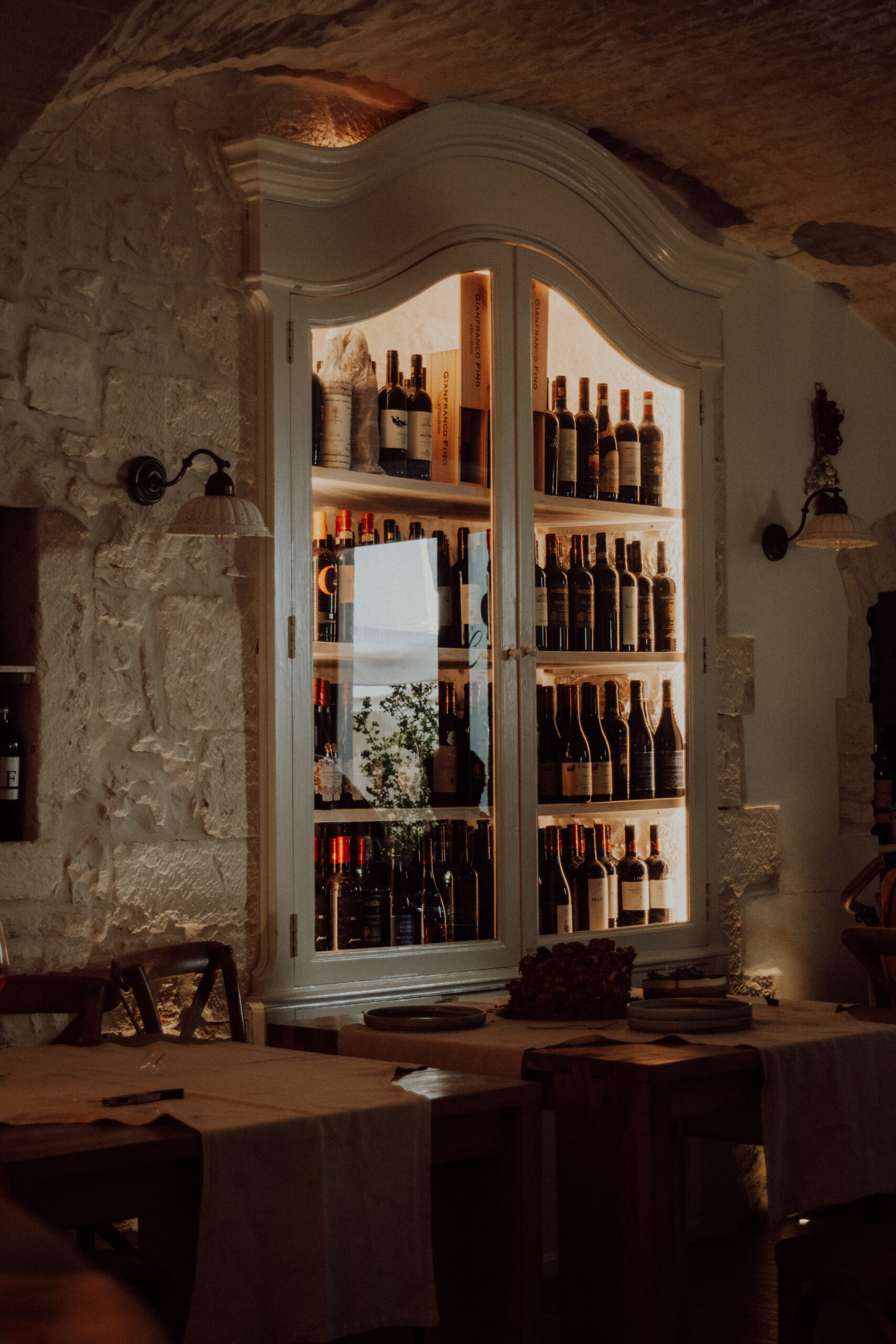
Masseria Li Veli is one of my personal favorites, and their Orion Primitivo is usually pretty easy to get your hands on. Masca del Tacco’s Lu Rappaio Primitivo di Manduria is another one I reach for pretty regularly. San Marzano is a great producer and their Sessantani is perfect for special occasions, or you could always go for Gianfranco Fino and Morella for something more boutique and biodynamic.
Negroamaro
This one is my personal favorite, and I will die on that hill.
The name translates, roughly, to “black and bitter” – which sounds intimidating and is actually just plain accurate. Negroamaro is Puglia’s most widely planted red grape, and it shows up across the Salento peninsula in a range of styles, from deep, brooding reds to one of the most interesting rosés you’ll ever taste.
At its best, Negroamaro is savory in a way that a lot of New World wines simply aren’t. There’s dark cherry and blackberry, yes, but also olive, dried herbs, a little tobacco, and a distinctive bitter edge on the finish that makes it incredibly food-friendly. It doesn’t try to impress you immediately – it kind of like the slow burn love that grows on you over the course of a meal, which is exactly the point.
What it tastes like:
Dark cherry, black olive, Mediterranean herbs, tobacco, with a characteristic bitter finish. Medium-to-full bodied, with good acidity.
What to eat with it:
Orecchiette with braised meat ragù (my favorite), grilled sausage, hard aged cheeses, anything with eggplant (helloooo parmigiana). The acidity in the wine plays beautifully against rich, fatty dishes – so it’s a common favorite for Sunday lunches.
In rosé form:
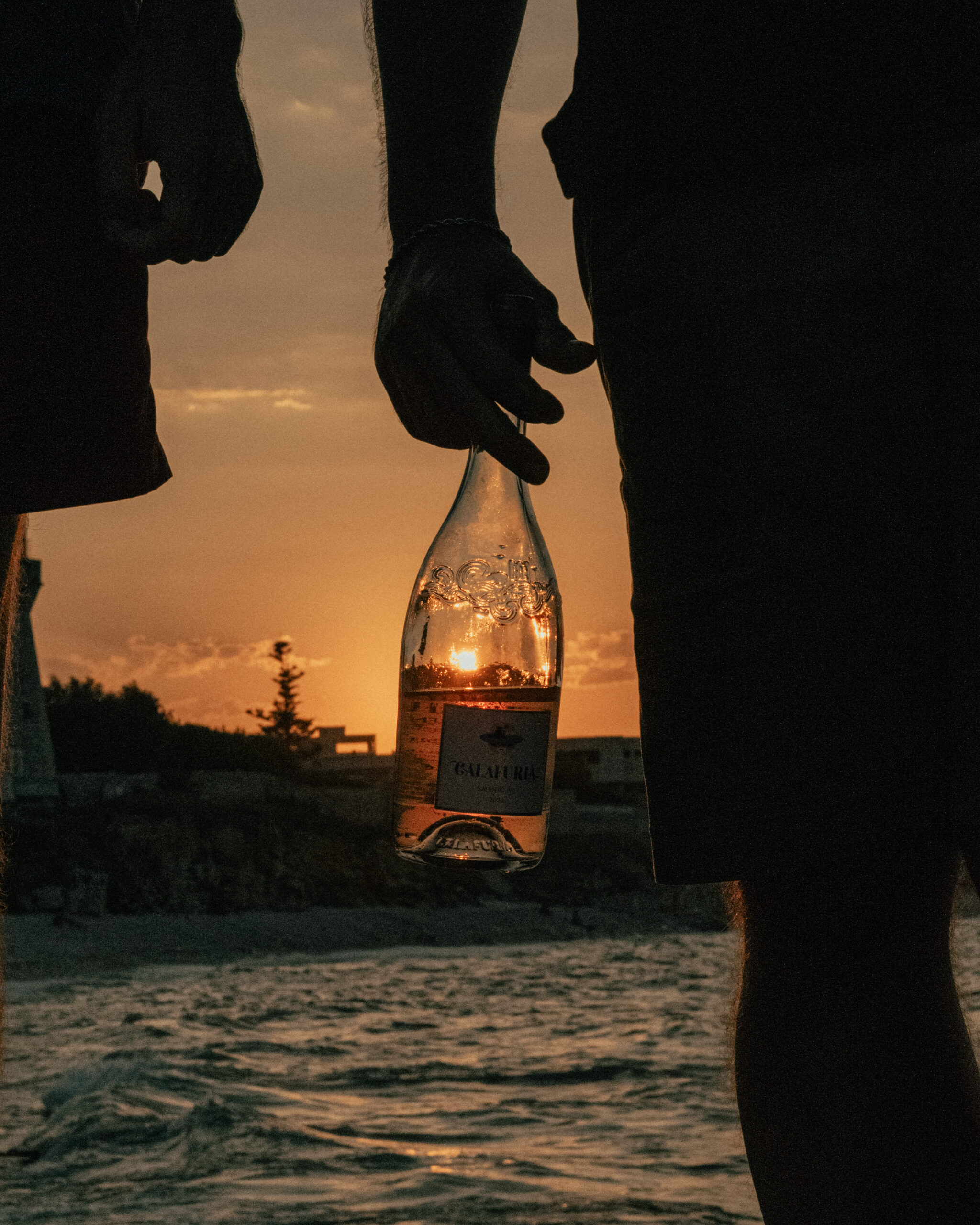
Negroamaro rosato is a revelation if you’ve only ever experienced pale Provençal pink. It’s deeper in color – more salmon to copper – with real substance and a dry, almost savory profile. This is not a poolside sipper, though I’ve been known to love it seaside. It’s a rosé that can hold its own next to food. My personal favorite? Calafuria. Full stop.
Producers worth seeking out:
Tormaresca’s Calafuria rose is always my first recommendation if you’re new to Apulian rose wine. Then Tramari, by San Marzano. Cantele makes reliable, food-friendly bottles at a great price point. Another winery I love is Rivera, and they have a a few in their lineup which are worth trying – Pungirosa and Fabri being two of them.
Salice Salentino
Think of Salice Salentino less as a grape and more as a place – it’s a DOC (Denominazione di Origine Controllata – this label is basically guaranteeing the quality of the grapes and the wine, DOCG is another variant of it) in the Salento peninsula, and the wines that come out of it are primarily Negroamaro-based, often blended with a small percentage of Malvasia Nera.
What makes Salice Salentino worth calling out separately is the aging. The Riserva versions are required to spend at least two years in oak, which gives them a complexity and structure you don’t always expect at their price point. These are serious wines – layered, really beautiful finish, built to sit on a table for a few hours — and they’re still dramatically underpriced compared to your Tuscany or Piedmont equivalents.
What it tastes like:
Ripe dark fruit, dried cherry, leather, vanilla from the oak, with that signature Negroamaro bitter edge. The Riserva versions develop tobacco and earthy, almost truffle-like notes over time – they’re amazing if you haven’t tried one yet.
What to eat with it:
This is your wine for a proper Sunday lunch. Slow-cooked lamb, braised beef, hard aged cheeses. It can also handle game – venison, duck, boar – really well. I love a roe deer ragu for this wine.
Producers worth seeking out:
Leone de Castris’ “Five Roses” (technically a rosato, but a historic and important one), Candido, and Morella.
Verdeca
I’ll give you a white on this list – and this is the one that genuinely surprises people, and not just because I’m not a HUGE white wine drinker.
Verdeca is an ancient Apulian white grape that nearly disappeared. For decades it was used mostly as a blending grape or for Martini & Rossi vermouth production (yep, you read that right). But a handful of producers have been vinifying it as a standalone varietal, and the results are ohhh so tasty.
It’s crisp and aromatic with high acidity — think green apple, white peach, a little citrus zest, and a flinty, almost saline mineral quality that makes it taste unmistakably coastal. In the summer heat of Puglia, a cold glass of Verdeca is one of the more perfect things in the world. For me, it’s my go-to with a plate of prosciutto and melon. Literally the most perfect afternoon treat I can think of.
What it tastes like:
Green apple, white peach, lemon zest, fresh herbs, with a mineral, almost briny finish. Light-to-medium bodied, high acidity, and very refreshing.
What to eat with it:
If you’re a seafood lover, this one’s for you. Raw oysters, grilled branzino, fried calamari, burrata with a little lemon. It also works beautifully as an aperitivo wine – which, if you’ve read my post on Italian aperitivo culture, you know is high praise from me.
Producers worth seeking out:
Chiaromonte makes a beautiful single-varietal Verdeca. Also look for blends from the Gravina DOC, because they tend to be very Verdeca forward.
Fiano Minutolo
Of course, I saved the most surprising one for last.
Fiano Minutolo (sometimes just called Minutolo) is often called the “Muscat of Puglia” – not because it’s sweet, but because it’s intensely aromatic in a way that almost doesn’t seem possible for a dry white wine. It smells like peach blossoms and orange zest and honey, and then you taste it and it’s dry, crisp, and bright. The disconnect between the nose and the palate is part of what makes it so interesting. And for me, it opens up in a really unique way the longer it’s in your glass.
It’s also genuinely rare. Production is small, distribution outside of Italy is limited, and a lot of people who visit Puglia never even encounter it. If you find it on a wine list, order it. Please.
What it tastes like:
Intensely aromatic – peach, apricot, citrus blossom, a touch of honey – but dry and refreshing on the palate. Medium body, good acidity.
What to eat with it:
Lightly spiced dishes – you don’t want to overpower this one, seafood, soft fresh cheeses, anything with citrus. It also works on its own as an aperitivo, and it’s one of the few dry whites that can hold its own next to a charcuterie spread without getting lost. Helloooooo prosciutto and melon. Yes, I’m obsessed.
Producers worth seeking out:
Polvanera is the name most associated with bringing more attention to Minutolo and their bottles are worth the effort to track them down. Chiaromonte also produces a really nice variety too.
The Bottom Line
Puglia is producing some of the most exciting, food-friendly, and undervalued wines in Italy right now. The grapes are ancient, the winemakers are passionate, and the prices haven’t caught up to the quality…yet. Which means this is EXACTLY the right moment to pay attention.
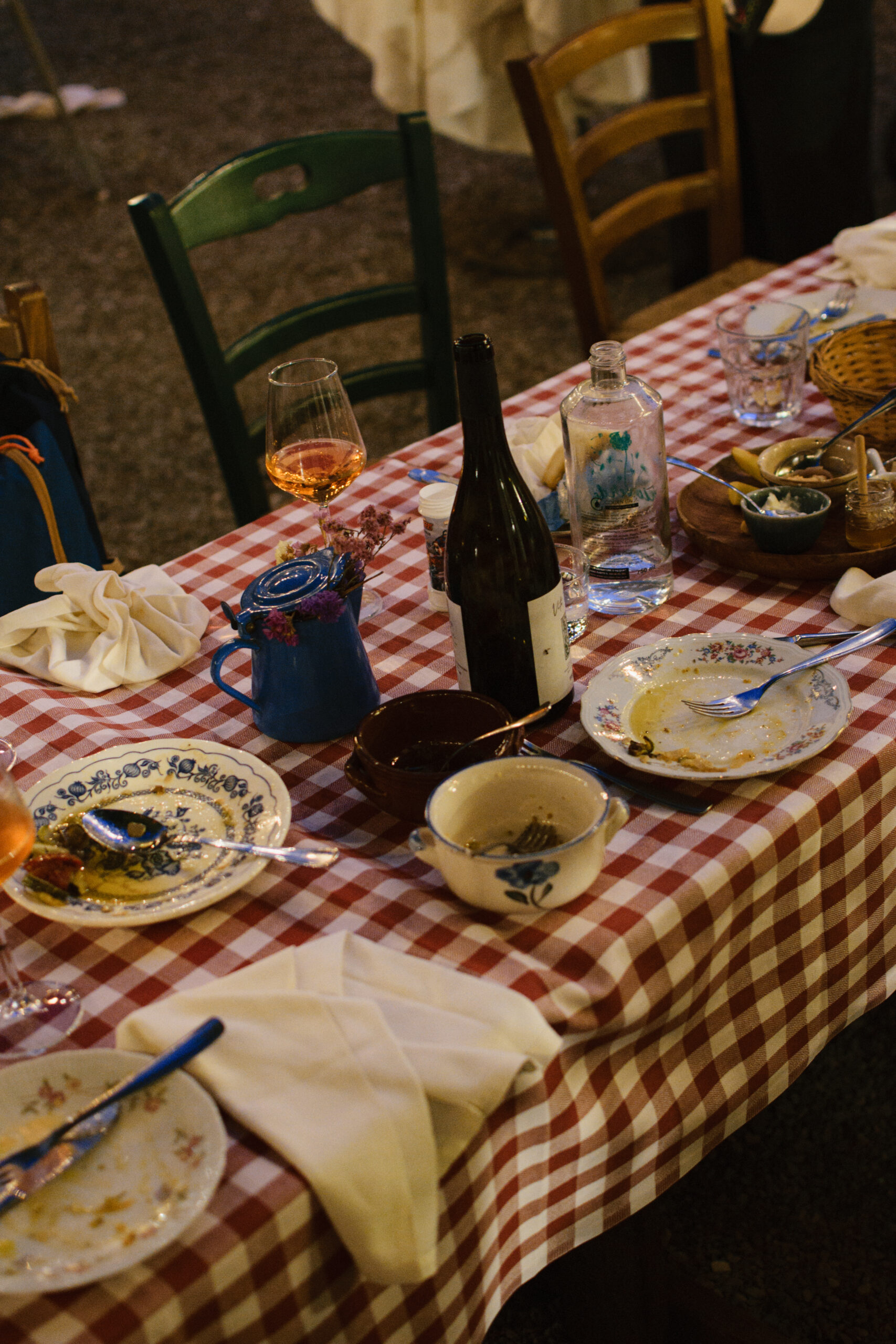
Whether you’re building a wine list, planning a trip, or just looking for something new to bring to your next dinner party – this is a great place to start. And if you ever get the chance to drink any of these in Puglia itself, with the right food and the right company and no reason to be anywhere else?
Even better.